How Cryptocurrency Transaction Trails Shape Bonus Unlocking Timelines in Mobile Poker and Slot Ecosystems
Rosa Reed · Aug 19, 2026
How Cryptocurrency Transaction Trails Shape Bonus Unlocking Timelines in Mobile Poker and Slot Ecosystems
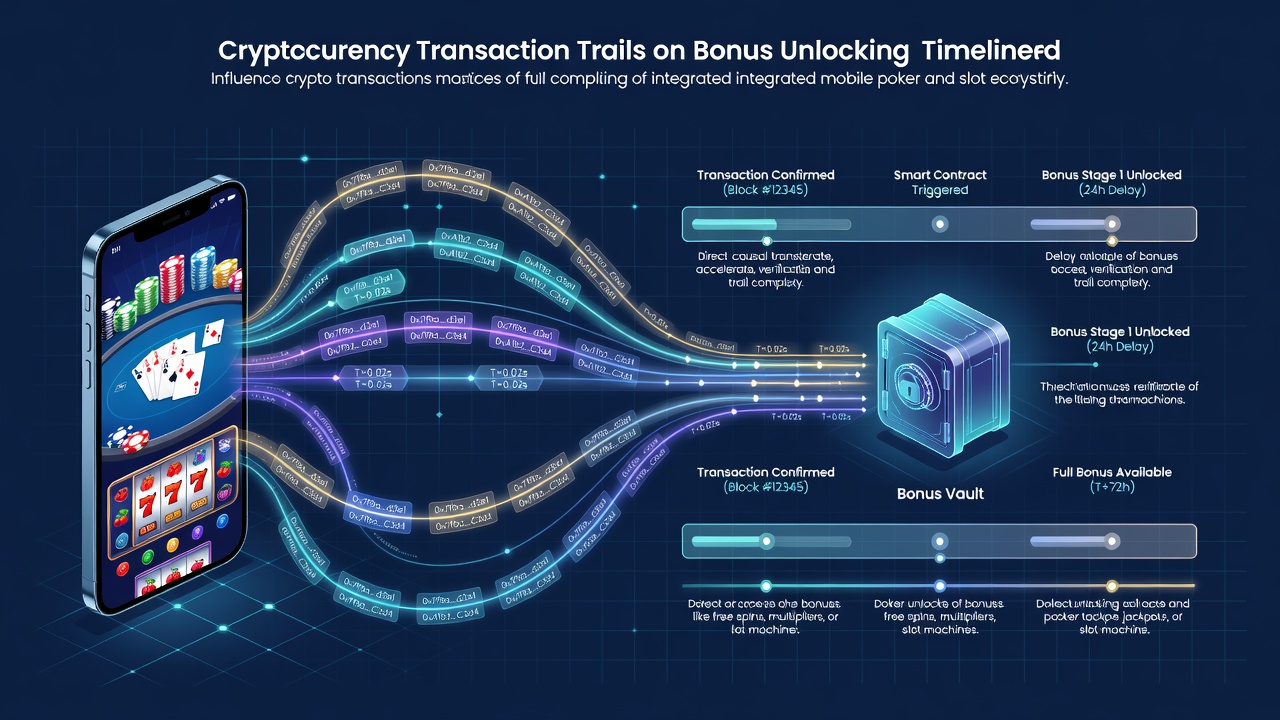
Integrated mobile poker and slot ecosystems rely on cryptocurrency networks that record every transfer in permanent ledgers, and these records directly determine when bonus funds become available for play or withdrawal. Blockchain explorers allow operators to trace wallet addresses across multiple hops, which triggers automated compliance checks that extend unlocking periods from hours to several days. Data from the Financial Crimes Enforcement Network shows that operators using Bitcoin and Ethereum mainnets experienced average bonus hold times of 48 to 72 hours during peak verification windows in 2025, with delays increasing when transaction clusters matched known mixing services.
Transaction Trails and Real-Time Compliance Filters
Operators embed compliance scripts that scan incoming deposits for patterns such as rapid layering or connections to high-risk addresses, and these scripts pause bonus activation until human reviewers clear the trail. In August 2026 several major platforms updated their filters to include Solana and Polygon activity, resulting in an additional 12-hour average delay for users whose deposits passed through decentralized exchanges. Researchers at the University of Nevada Gaming Innovation Lab documented that 37 percent of bonus-related support tickets in Q2 2026 stemmed from trail-analysis holds rather than standard KYC mismatches.
Poker Ecosystem Specifics
Mobile poker rooms integrate multi-table tournament bonuses that unlock only after the deposit trail receives three on-chain confirmations plus internal risk scoring, while cash-game rakeback bonuses follow shorter cycles because they tie to ongoing play volume. When a player deposits USDT from a newly created wallet that previously interacted with a mixer, the system routes the transaction to a secondary queue, extending the unlock window by 24 to 36 hours. Observers note that poker operators maintain separate whitelists for addresses with clean histories spanning more than 180 days, allowing those deposits to bypass the extended queue entirely.
Slot Platform Mechanics
Slot ecosystems apply progressive bonus structures where free-spin packages unlock in stages tied to deposit age and trail complexity, so a single hop through a regulated exchange clears faster than a path involving multiple DeFi protocols. Platforms record each slot spin against the original deposit hash, creating an auditable link that regulators can request during periodic audits. European Gaming and Betting Association figures reveal that slot bonus redemption rates dropped 9 percent in markets requiring full trail disclosure compared with regions using lighter verification standards.

Cross-Platform Data Sharing
Integrated ecosystems share hashed wallet data across poker and slot divisions so a deposit cleared for one vertical automatically satisfies initial checks for the other, yet secondary trail anomalies still force re-evaluation. This shared database reduced duplicate reviews by 41 percent according to internal metrics released by two North American operators in early 2026. When a single address appears in both poker tournament entries and slot bonus redemptions within a 48-hour window, the system flags the activity for manual review, adding between 18 and 30 hours to the unlocking timeline.
Regulatory Influence on Timelines
Canadian provincial regulators require operators to retain full transaction graphs for five years, which encourages platforms to front-load trail analysis before bonus activation rather than after, shifting delays earlier in the player journey. Australian state licensing conditions similarly mandate source-of-funds verification for deposits above AUD 5,000, prompting operators to implement graduated unlock schedules that release 25 percent of bonus value after each successful compliance stage. These staged releases prevent full bonus access until the complete trail receives clearance, a process that averaged 4.2 days across sampled accounts in mid-2026.
Future Adjustments Observed in 2026
By August 2026 several platforms began testing zero-knowledge proof solutions that verify deposit legitimacy without exposing full wallet histories, potentially shortening unlock windows to under six hours for compliant transactions. Early adopters reported a 22 percent reduction in support volume after implementing these proofs on Ethereum Layer-2 networks. The same period saw increased use of stablecoin rails because their centralized issuers provide faster address attribution compared with native tokens.
Conclusion
Cryptocurrency transaction trails continue to dictate bonus unlocking timelines across integrated mobile poker and slot ecosystems through automated compliance layers, shared databases, and regulatory staging requirements. Platforms that refine trail-analysis speed while maintaining audit readiness achieve faster player access without sacrificing oversight obligations. Ongoing protocol upgrades and proof-of-concept tools suggest measurable compression of these timelines remains achievable as infrastructure matures.